
The challenges in HVAC service industry on summer season are a huge hurdle for service providers across the world. As temperatures rise, air conditioning and refrigeration systems are pushed to their limits. Residential, commercial, and industrial clients all rely on their cooling equipment more than ever during this period.
This dramatic rise in demand brings a unique set of obstacles — from heavy workloads and equipment failures to shortage of skilled workers and delivery bottlenecks — that service providers must navigate efficiently and promptly.
Why Summer Season Tests the HVAC Industry
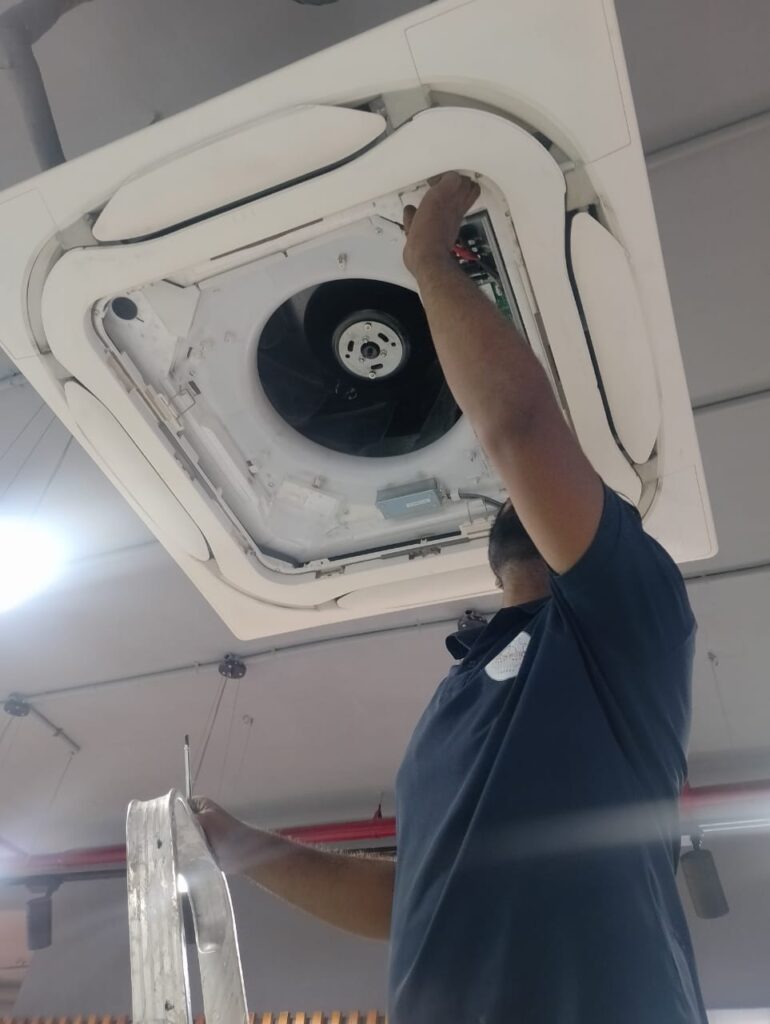
The challenges in HVAC service industry on summer season predominantly arise due to a dramatic increase in service calls. Air conditioning plays a key role in maintaining comfortable, productive, and healthy spaces. Naturally, when temperatures soar, service providers face a rush of requests for repairs, maintenance, and installations.
Rising Demand for Services
During the summer months, nearly all air conditioning systems operate at their maximum capacity. Naturally, this results in a large number of service requests — from minor repairs to complete breakdowns — adding pressure to service providers.
This highlights how challenges in HVAC service industry on summer season are directly tied to the heavy workloads companies face.
Higher Failure Rate of Equipment
Running air conditioning equipment under heavy load for long periods can accelerate wear and lead to failures. Compressors overheat, coils freeze, and refrigerant levels drop, adding to service calls and putting additional stress on already busy service teams.
This phenomenon underscores another key challenge in HVAC service industry on summer season.
Operational Hurdles During Peak Season
Managing service operations during this hectic period brings a unique set of obstacles.
Shortage of Skilled Technicians
One of the greatest challenges in HVAC service industry on summer season is a shortage of trained and experienced service engineers.
Technicians need specialized knowledge to handle a range of issues, from refrigeration circuits to sophisticated control systems. The scarcity of such workers makes it hard for companies to keep up with growing service calls.
Logistic Constraints
Obtaining spare parts promptly can be challenging during the busy season.
Supply chains may be stretched due to high demand, and delivery timelines may suffer delays — adding to service bottlenecks.
Rising Customer Expectations
Today’s consumers have little patience for service disruptions.
They expect fast, reliable service — often within hours — which adds pressure to companies already battling logistical and staffing issues.
This highlights another key challenge in HVAC service industry on summer season.
Impact on Customer Satisfaction
Slow service delivery and repeated equipment failures can affect customer satisfaction and loyalty.
If service providers are unable to respond promptly, businesses may suffer financial losses, while residential clients become frustrated and lose confidence in their service providers.
This underscores the necessity to resolve challenges in HVAC service industry on summer season quickly and efficiently.
Solutions to Mitigate Summer Season Stress
Despite these obstacles, there are strategies companies can implement to ease the pressure during peak months.
1. Proactive Maintenance
Implementing a preventive maintenance schedule well in advance of summer can help avoid many failures.
This approach reduces the likelihood of breakdowns and makes service delivery more manageable during busy periods — effectively addressing challenges in HVAC service industry on summer season.
2. Training and Hiring
Training service engineers and adding temporary skilled workers during peak periods can ease staffing pressures.
This lets companies handle a greater volume of service calls and resolve issues promptly.
3. Inventory Planning
Maintaining a well-stocked inventory of essential components — capacitors, compressors, refrigerants — cuts delivery timelines and service disruptions.
This tactic directly assists in mitigating challenges in HVAC service industry on summer season.
4. Customer Communication
Proactively communicating service timelines, repair progress, and maintenance schedules can ease customer dissatisfaction and foster loyalty.
Setting realistic expectations helps companies handle service delivery more effectively.
Conclusion
The challenges in HVAC service industry on summer season are undeniably significant. Rising service demands, shortage of skilled workers, equipment failures, and delivery bottlenecks all combine to create a perfect storm for service providers.
However, through proactive maintenance, training, careful inventory management, and clear communication with clients, companies can navigate these obstacles successfully.
Ultimately, service providers who prepare well and respond efficiently will retain their reputation and grow their businesses in a challenging environment.
Get started instantly—earn on every referral you make! https://shorturl.fm/lSHYg
Grow your income stream—apply to our affiliate program today! https://shorturl.fm/rCRMi
Start profiting from your network—sign up today! https://shorturl.fm/r1dbP
Earn passive income this month—become an affiliate partner and get paid! https://shorturl.fm/4BRcc
Turn your traffic into cash—join our affiliate program! https://shorturl.fm/tbM5r
Boost your income effortlessly—join our affiliate network now! https://shorturl.fm/EY72C
Earn up to 40% commission per sale—join our affiliate program now! https://shorturl.fm/4Ll9E
Turn referrals into revenue—sign up for our affiliate program today! https://shorturl.fm/2JG4Z
Boost your income effortlessly—join our affiliate network now! https://shorturl.fm/KRWXl
Tap into unlimited earning potential—become our affiliate partner! https://shorturl.fm/u5cBK
Share our products and watch your earnings grow—join our affiliate program! https://shorturl.fm/mY5wy
Apply now and receive dedicated support for affiliates! https://shorturl.fm/YsAP8
Become our affiliate and watch your wallet grow—apply now! https://shorturl.fm/hkocb
Monetize your influence—become an affiliate today! https://shorturl.fm/9u2TK
Share our products, reap the rewards—apply to our affiliate program! https://shorturl.fm/SqGfC
Partner with us and enjoy high payouts—apply now! https://shorturl.fm/qFsKy
Share our products and watch your earnings grow—join our affiliate program! https://shorturl.fm/m18u5
Join our affiliate program today and start earning up to 30% commission—sign up now! https://shorturl.fm/Wfw0p
Monetize your traffic instantly—enroll in our affiliate network! https://shorturl.fm/kMVoH
Start earning every time someone clicks—join now! https://shorturl.fm/9KtWz
Turn your audience into earnings—become an affiliate partner today! https://shorturl.fm/kJ7mg
Share our offers and watch your wallet grow—become an affiliate! https://shorturl.fm/g5h3w
Turn your audience into earnings—become an affiliate partner today! https://shorturl.fm/lBV29
Share our products and watch your earnings grow—join our affiliate program! https://shorturl.fm/JkH8g
Drive sales, collect commissions—join our affiliate team! https://shorturl.fm/lXPMT
Tap into unlimited earnings—sign up for our affiliate program! https://shorturl.fm/OCYsk
Sign up for our affiliate program and watch your earnings grow! https://shorturl.fm/8tJlk
Share our products and watch your earnings grow—join our affiliate program! https://shorturl.fm/eVe43
Partner with us and earn recurring commissions—join the affiliate program! https://shorturl.fm/BPBx5
Start earning on every sale—become our affiliate partner today! https://shorturl.fm/pCcAh
Tap into unlimited earnings—sign up for our affiliate program! https://shorturl.fm/AQ1XJ
Share your unique link and earn up to 40% commission! https://shorturl.fm/slQ69
Share our products and watch your earnings grow—join our affiliate program! https://shorturl.fm/AzSvY
Earn big by sharing our offers—become an affiliate today! https://shorturl.fm/xA601
Share our products, reap the rewards—apply to our affiliate program! https://shorturl.fm/OIfyd
Join our affiliate program today and start earning up to 30% commission—sign up now! https://shorturl.fm/08HQF
Earn big by sharing our offers—become an affiliate today! https://shorturl.fm/VvyHe
Drive sales, collect commissions—join our affiliate team! https://shorturl.fm/xUI1k
Refer customers, collect commissions—join our affiliate program! https://shorturl.fm/ZcjMk
https://shorturl.fm/8B5KD
https://shorturl.fm/W8aQj
https://shorturl.fm/n5tvH
https://shorturl.fm/AmtHQ
https://shorturl.fm/1eb7S
https://shorturl.fm/hmGIy
https://shorturl.fm/Syv2r
https://shorturl.fm/y8FLP
https://shorturl.fm/VcaQm
https://shorturl.fm/IsyOT
https://shorturl.fm/f6cAZ
https://shorturl.fm/tq5Jw
https://shorturl.fm/P8Yiq
https://shorturl.fm/in1wm
https://shorturl.fm/NtWwr
https://shorturl.fm/CxHeZ
https://shorturl.fm/pxjbc
https://shorturl.fm/VmOrq
https://shorturl.fm/zkRB5
https://shorturl.fm/HNphV
https://shorturl.fm/kWb2t
https://shorturl.fm/SlGIu
https://shorturl.fm/Ah4m5
https://shorturl.fm/AlRqq
https://shorturl.fm/T8NMh
https://shorturl.fm/IxnPL
https://shorturl.fm/rB0xk
https://shorturl.fm/wvzhn
https://shorturl.fm/sd1ue
https://shorturl.fm/i8W1N
https://shorturl.fm/5yyKG
https://shorturl.fm/AV2X9
https://shorturl.fm/YaB2n
https://shorturl.fm/xQ5n8
https://shorturl.fm/bIJor
https://shorturl.fm/f98g6
https://shorturl.fm/fTZvk
https://shorturl.fm/Jalxm
https://shorturl.fm/Yg5C1
https://shorturl.fm/eECU5
https://shorturl.fm/rw5X4
https://shorturl.fm/29aSe
https://shorturl.fm/OiF0P
https://shorturl.fm/RV6MO
https://shorturl.fm/WsiRH
https://shorturl.fm/ZJ4OR
https://shorturl.fm/4KSbw
https://shorturl.fm/j2XaB
https://shorturl.fm/njqzq
https://shorturl.fm/1Zxzw
https://shorturl.fm/Z895j
https://shorturl.fm/Uh262
https://shorturl.fm/IG8bM
https://shorturl.fm/DRFkD
https://shorturl.fm/NNyTU
https://shorturl.fm/AxwtT
https://shorturl.fm/Y6GpU
https://shorturl.fm/vqNNE
https://shorturl.fm/btVyJ
https://shorturl.fm/B59dR
https://shorturl.fm/RqjT0
https://shorturl.fm/rRt48
https://shorturl.fm/FvkLe
https://shorturl.fm/gX7I3
https://shorturl.fm/0qCyG
https://shorturl.fm/l7cfP
https://shorturl.fm/WCA26
https://shorturl.fm/tHioR
https://shorturl.fm/nOEhq
https://shorturl.fm/1KagD
https://shorturl.fm/B7xJh
https://shorturl.fm/Z7agS
https://shorturl.fm/vXc3m
https://shorturl.fm/9aQK1
https://shorturl.fm/T3rZ7
https://shorturl.fm/7tP9A
https://shorturl.fm/3MY5R
https://shorturl.fm/YZ19g
https://shorturl.fm/dlB1Y
https://shorturl.fm/3N7YT
https://shorturl.fm/txDF7
weed delivery fast and private in usa
https://shorturl.fm/Ouxj6
https://shorturl.fm/bvsZ1
https://shorturl.fm/gHMgH
https://shorturl.fm/15ZgW